Move More, Age Well
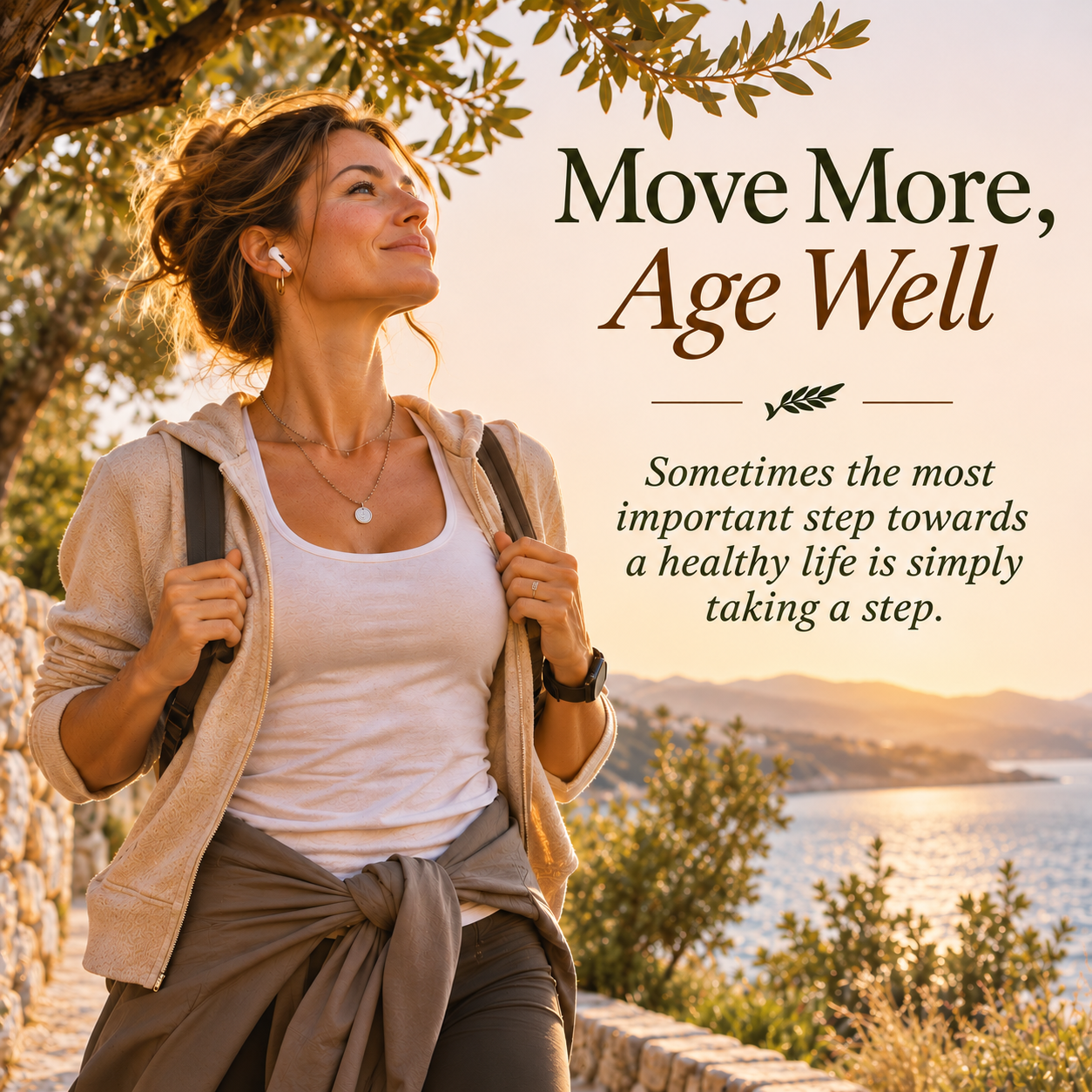
Sometimes the most important step towards a healthy life is simply taking a step.
Movement is, of course, an essential part of healthy ageing and living well. Regular physical activity does more than keep us fit; it also helps many of our body's systems function well.
It supports our metabolism, contributes to blood sugar control, improves circulation and helps protect cardiovascular health.
It also supports muscle and bone health, positively affects the function of mitochondria—the structures responsible for producing energy in our cells—and may improve sleep quality.
Movement benefits our minds as well as our bodies. Regular exercise may improve our mood, reduce stress and help us feel more energetic.
How Much Should We Move?
The World Health Organization recommends that adults do at least 150–300 minutes of moderate-intensity aerobic activity each week. Brisk walking, cycling and swimming are examples of these activities. Strength exercises that work the major muscle groups at least two days a week are important, too.
Practices such as Pilates, yoga and stretching may support flexibility, mobility and balance.
Of course, everyone's age, health and physical capacity are different. What matters is creating a sustainable movement routine that suits us.
What Happens When We Stay Inactive for Too Long?
One of the biggest challenges of modern life is spending much of the day sitting. For people who work at a desk or remain inactive at home for long periods, this may adversely affect metabolic health over time.
Prolonged inactivity can pose risks to blood sugar regulation, circulation and cardiovascular health.
Whenever possible, getting up every half hour to walk for a few minutes or do some simple movements is a helpful habit.
For example, marching on the spot, doing gentle stretches or taking a short break with movements such as Cross Crawl, which involve coordinating opposite arms and legs, can help us break up prolonged inactivity.
Making Movement Part of Everyday Life
We do not always need to go to the gym to move more. Taking the stairs instead of the lift, walking short distances rather than driving, standing up while talking on the phone or creating small movement breaks during the day can all be good starting points.
What matters is seeing movement as a natural part of our way of life, rather than simply an exercise session at a particular time.
Because on the longevity journey, sustainable habits are far more valuable than short bursts of intense effort.